

Access Sensor Technologies Air Samplers
Small, portable, virtually-silent, reliable, and easy-to-use air samplers for particulate and gaseous pollutants. Access Sensor Technology’s air sampling products can help you and your team collect more samples with the time and budget you have; and make the experience better for everyone involved.
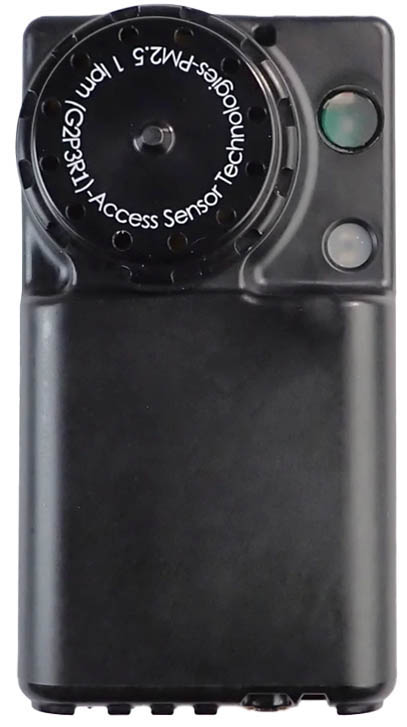
UPAS v2.1
The Ultrasonic Personal Air Sampler (UPAS) is a wearable device that samples particulate matter (PM) air pollution onto filters. This device is smaller, lighter, quieter, more affordable, easier to use, and more robust than conventional particulate matter sampling equipment. Samples collected with the UPAS can be analyzed to determine:
- The average PM mass concentration that was present in the sampled air.
- The composition of the PM (for example, the amount that is made up of black carbon, or various metals).
Reliable Operation: Active controls maintain the target volumetric flow rate even as environmental conditions change and the pressure drop across the filter increases. The UPAS logs the flow rate and other operational data to facilitate robust sample quality assurance.
Durable Construction: The UPAS has been field tested over thousands of hours in large sampling campaigns and challenging environments around the world.
Specifications
| Exterior size | 128 mm × 70 mm × 23 mm |
| Weight | 200 g (without inlet or filter cartridge) |
| Noise | <45 dB |
| Size-selective inlets (per relevant EPA, ACGIH, and ISO criteria) | PM2.5, 1 L min-1 PM2.5, 2 L min-1 Respirable, 2 L min-1 PM10 / Thoracic, 2 L min-1 |
| Filter size | 37 mm (default) or 25 mm; quick-change filter cartridges for easy in-field handling |
| Battery type | Li-ion, 24 W-h |
| Battery endurance | 20 to 48 h, depending on filter media and sample settings; extendable via external battery or line power. |
| On-board sensors monitor: | • Sample flow rate • Air temperature/pressure/relative humidity • GPS location of UPAS (can be deactivated) • Differential pressure across the sample filter • Light (Lux, IR, UV, UV index) • Motion/acceleration (linear & angular, 6 DOF) |
Lab & Field Testing Documentation
The UPAS has been laboratory- and field-tested alongside conventional personal sampling equipment including the Personal Environmental Monitor (PEM), the Harvard Impactor, the Mesa Labs/BGI Triplex Cyclone, and the Personal Modular Impactor (PMI). Validation data can be found in the following peer-reviewed publications:
Volckens, J., C. Quinn, D. Leith, J. Mehaffy, C. S. Henry, and D. Miller-Lionberg. 2017. Development and evaluation of an ultrasonic personal aerosol sampler. Indoor Air 27:409–16. doi: 10.1111/ina.12318. See Figure 5.
Arku, R. E., A. Birch, M. Shupler, S. Yusuf, P. Hystad, and M. Brauer. 2018. Characterizing exposure to household air pollution within the Prospective Urban Rural Epidemiology (PURE) study. Environment International 114:307–17. doi: 10.1016/j.envint.2018.02.033. See Figure 5.
Pillarisetti, A., E. Carter, S. Rajkumar, B. N. Young, M. L. Benka-Coker, J. L. Peel, M. Johnson, and M. L. Clark. 2019. Measuring personal exposure to fine particulate matter (PM2.5) among rural Honduran women: A field evaluation of the Ultrasonic Personal Aerosol Sampler (UPAS). Environment International 123:50–3. doi: 10.1016/j.envint.2018.11.014. See Figures 2 and 3.
Burrowes, V. J., R. Piedrahita, A. Pillarisetti, L. J. Underhill, M. Fandiño‐Del‐Rio, M. Johnson, J. L. Kephart, S. M. Hartinger, K. Steenland, L. Naeher, K. Kearns, J. L. Peel, M. L. Clark, W. Checkley, HAPIN Investigators. 2020. Comparison of next‐generation portable pollution monitors to measure exposure to PM2.5 from household air pollution in Puno, Peru. Indoor Air 30:445-58. doi: 10.1111/ina.12638. See Figures 2 and 3.
Li, X., J. Tryner, B. N. Young, L. Hernandez-Ramirez, M. Phillips, S. WeMott, G. Erlandson, G. Kuiper, D. Dean, N. Martinez, L. Sanpedro, S. Magzamen, J. Volckens. 2024. Application and validation of a wearable monitor for assessing time- and location-resolved exposures to particulate matter in California’s Central Valley. Aerosol Science and Technology. doi: 10.1080/02786826.2024.2415481. See Figure 1 and Table 1.
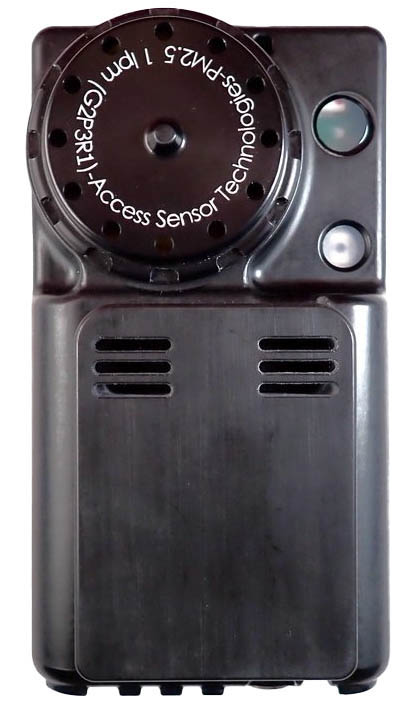
UPAS v2.1 PLUS
Quiet, portable, easy-to-use particulate air pollution sampler with time- and location-resolved fine PM sensing.
The Ultrasonic Personal Air Sampler (UPAS) is a wearable device that samples particulate matter (PM) air pollution onto filters while logging time-resolved data on device location and the local fine particle mass concentration.
Filter samples collected with the UPAS can be analyzed to determine:
- The average PM mass concentration that was present in the sampled air.
- The composition of the PM (for example, the amount that is made up of black carbon, or various metals).
Time-resolved fine PM, GPS, temperature, humidity, light intensity, and motion data logged by the UPAS v2.1 PLUS can be analyzed to identify: locations where pollution levels were elevated and likely sources of exposure. Pairing of the filter sample and time-resolved sensor provides greater confidence in sensor-derived pollution estimates.
Reliable operation: Active controls maintain the target volumetric flow rate even as environmental conditions change and the pressure drop across the filter increases. The UPAS logs the flow rate and other operational data to facilitate robust sample quality assurance.
Durable construction: The UPAS has been field tested over thousands of hours in large sampling campaigns and challenging environments around the world.
Minimal burden: The UPAS is small, light, and silent enough to be worn in a person’s breathing zone with minimal disruption to work and life.
Sampling made simple: It’s easy to set up a sample using the mobile app.
Specifications
| Exterior size | 128 mm × 70 mm × 36 mm |
| Weight | 250 g (without inlet or filter cartridge) |
| Noise | <45 dB |
| Size-selective inlets (per relevant EPA, ACGIH, and ISO criteria) | PM2.5, 1 L min-1 PM2.5, 2 L min-1 Respirable, 2 L min-1 PM10 / Thoracic, 2 L min |
| Filter size | |
| Battery type | Li-ion, 24 W-h |
| Battery endurance | |
| On-board sensors monitor: |
• Fine PM mass concentration (Sensirion SPS30)• GPS location of UPAS (can be deactivated)
• Light (Lux, IR, UV, UV index) • Motion/acceleration (linear & angular, 6 DOF) • Air temperature/pressure/relative humidity • Sample flow rate • Differential pressure across the sample filter • CO2 concentration (Sensirion SCD41)*
• Qualitative tVOC and NOx levels (Sensirion SGP41)* *These sensors are experimental features and the quality of these data is uncertain.
|
Lab & Field Testing Documentation
The UPAS has been laboratory- and field-tested alongside conventional personal sampling equipment including the Personal Environmental Monitor (PEM), the Harvard Impactor, the Mesa Labs/BGI Triplex Cyclone, and the Personal Modular Impactor (PMI). Validation data can be found in the following peer-reviewed publications:
Volckens, J., C. Quinn, D. Leith, J. Mehaffy, C. S. Henry, and D. Miller-Lionberg. 2017. Development and evaluation of an ultrasonic personal aerosol sampler. Indoor Air 27:409–16. doi: 10.1111/ina.12318. See Figure 5.
Arku, R. E., A. Birch, M. Shupler, S. Yusuf, P. Hystad, and M. Brauer. 2018. Characterizing exposure to household air pollution within the Prospective Urban Rural Epidemiology (PURE) study. Environment International 114:307–17. doi: 10.1016/j.envint.2018.02.033. See Figure 5.
Pillarisetti, A., E. Carter, S. Rajkumar, B. N. Young, M. L. Benka-Coker, J. L. Peel, M. Johnson, and M. L. Clark. 2019. Measuring personal exposure to fine particulate matter (PM2.5) among rural Honduran women: A field evaluation of the Ultrasonic Personal Aerosol Sampler (UPAS). Environment International 123:50–3. doi: 10.1016/j.envint.2018.11.014. See Figures 2 and 3.
Burrowes, V. J., R. Piedrahita, A. Pillarisetti, L. J. Underhill, M. Fandiño‐Del‐Rio, M. Johnson, J. L. Kephart, S. M. Hartinger, K. Steenland, L. Naeher, K. Kearns, J. L. Peel, M. L. Clark, W. Checkley, HAPIN Investigators. 2020. Comparison of next‐generation portable pollution monitors to measure exposure to PM2.5 from household air pollution in Puno, Peru. Indoor Air 30:445-58. doi: 10.1111/ina.12638. See Figures 2 and 3.
Li, X., J. Tryner, B. N. Young, L. Hernandez-Ramirez, M. Phillips, S. WeMott, G. Erlandson, G. Kuiper, D. Dean, N. Martinez, L. Sanpedro, S. Magzamen, J. Volckens. 2024. Application and validation of a wearable monitor for assessing time- and location-resolved exposures to particulate matter in California’s Central Valley. Aerosol Science and Technology. doi: 10.1080/02786826.2024.2415481. See Figure 1 and Table 1.
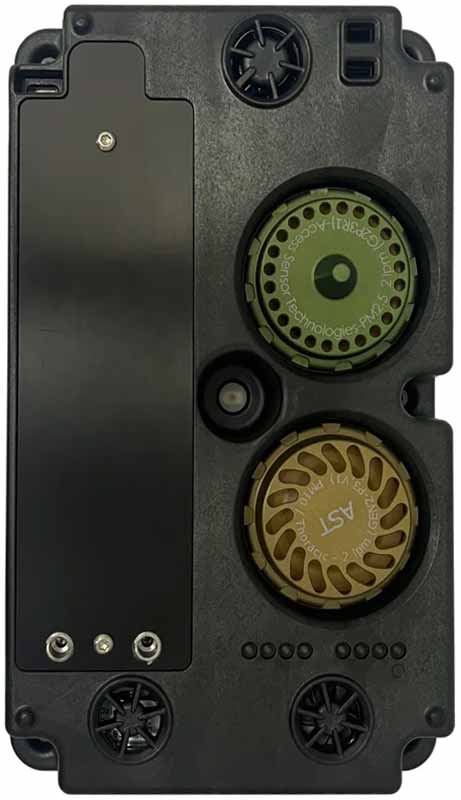
Home Health Box
The Home Health Box (HHB) is a compact and comprehensive indoor air sampler and monitor. The HHB uses the same virtually-silent pumping technology as our Ultrasonic Personal Air Sampler (UPAS). The HHB can be configured to sample and sense a range of pollutants:
- Up to two particulate matter sampling channels
- Up to two active gas sampling channels
- Time-resolved particulate matter sensing
- Time-resolved CO2 sensing
- Time-resolved sensing of up to four additional gases (e.g., NO2, CO) using electrochemical sensors
Specifications
Particulate matter sampling channels
| Quantity | The Home Health Box can configured with 0, 1, or 2 particulate matter sampling channels |
| Flow rate | 1.0 or 2.0 L min-1 (depending on the size-selective inlet used) |
| Flow rate accuracy | ± 4% of setpoint (actively controlled) |
| Available size-selective inlets | PM2.5 @ 1 L min-1, PM2.5 @ 2 L min-1, Respirable PM @ 2 L min-1, PM10/Thoracic @ 2 L min-1 |
| Filter size | 37 mm (default) or 25 mm; quick-change filter cartridges for easy in-field handling |
| Maximum back pressure | 7.0″ H2O @ 1 L min-1, 4.5″ H2O @ 2 L min-1 |
Gas sampling channels
| Quantity | The Home Health Box can configured with 0, 1, or 2 gas sampling channels |
| Flow rate | 3 to 30 mL min-1; user programmable |
| Flow rate accuracy | ± 4% of setpoint (actively controlled) |
| Compatible sorbent media | ¼” OD × 3.5” long (6.35-mm OD × 89-mm long) thermal desorption tubes Waters™ Sep-Pak® cartridges Common glass sorbent tubes (e.g., 6 to 10-mm in diameter) |
| Maximum back pressure | 37 mm (default) or 25 mm; quick-change filter cartridges for easy in-field handling |
| Maximum back pressure | 34″ H2O |
Pollutant sensors
| Baseline sensor package | Particulate matter: Sensirion SEN55 (laser light scattering) Carbon dioxide (CO2): Sensirion SCD30 (non-dispersive infrared; NDIR) tVOCs and NOx (qualitative estimates): Sensirion SGP41 (MOx) |
| Electrochemical sensors for additional pollutants | Up to four Alphasense B-4 series electrochemical sensors. These sensors are designed to measure ppb-level concentrations. NO2-B43F for nitrogen dioxide (measurement range = <1 to ~15 ppm); CO-B4 for carbon monoxide (measurement range = <1 to ~10 ppm); contact our engineering team if you’d like sensors for other pollutants added to your HHB (e.g., NO, O3) |
Power
| Power supply | 15 W, 5 V USB Type-C® |
| Line power | The Home Health Box can run indefinitely when plugged into a wall outlet |
| Battery | Li-ion; 24 W-h; battery life will depend on the sample configuration, filter media, sorbent media, and local air density; 8-h runtime on battery when collecting two filter samples on MTL PTFE membrane filters at 2 L min-1 and two gas samples on Markes Carbopack X SafeLok™ thermal desorption tubes at 30 mL min-1 with PM sensor, CO2 sensor, and one Alphasense B-series electrochemical sensor running in a location with 1.0 g L-1 air density. |
| Charging time | When the HHB is not running, the battery will charge fully in 2 h using the provided 15 W, 5 V USB Type-C wall adapter. |
Size, weight, and noise
| Exterior size | 213 mm × 132 mm × 107 mm, excluding size-selective inlets |
| Weight | Up to 1.5 kg; depends upon configuration and sample media installed (all sample media to be provided by the user) |
| Noise | < 50 dB at 25 cm distance |
Data logging
| Memory type | microSD™ card |
| Data logging interval | 5, 15, 30, or 60 s; default = 30 s |
Operating conditions
| Temperature | Operating = -20 to 60 °C; Charging = 0 to 45 °C; Storage = -20 to 50 °C |
| Relative humidity | Up to 95% at 40 °C (non-condensing) |
| Altitude | 2,500 ft (760 m) below sea level to 20,000 ft (6,100 m) above sea level; all sample flow rates will be adjusted automatically for variations in air density within this altitude range. |
Accessories
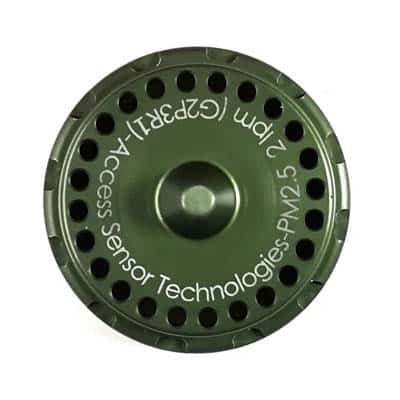
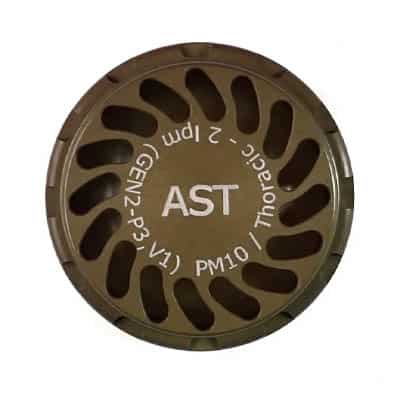
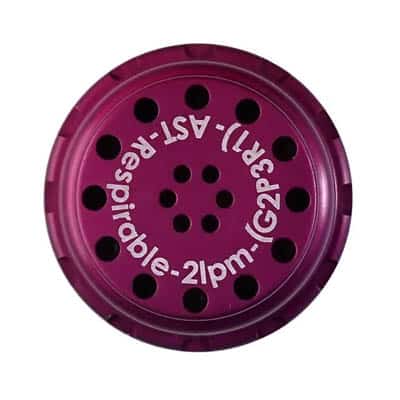
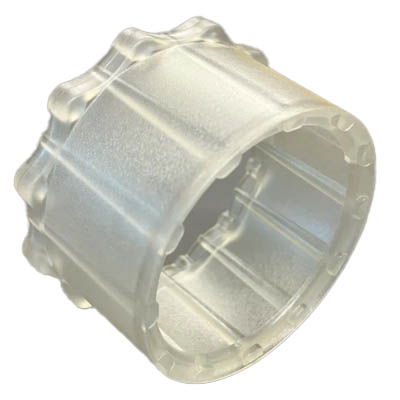
An inlet, filter cartridge, and sample filter are required to collect a particulate matter sample using any Ultrasonic Personal Air Sampler (UPAS) model or the Home Health Box (HHB).
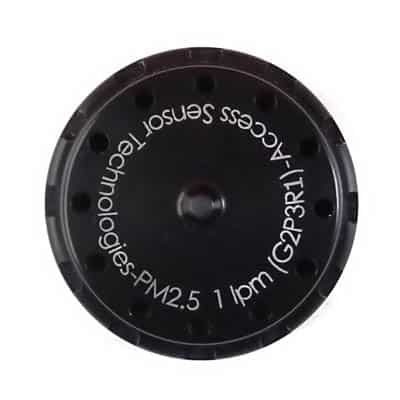
PM2.5 1 LPM Inlet
PM2.5 2 LPM Inlet
PM10 2 LPM Inlet
Respirable 2 LPM Inlet
Inlet Installation Tool
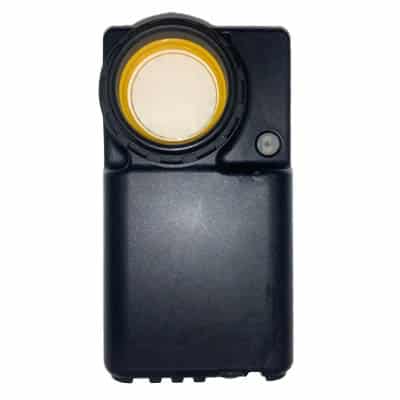
Open-faced Inlet
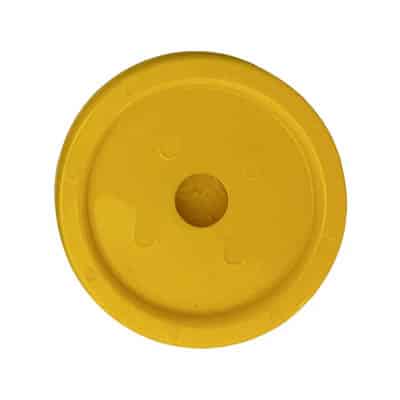
37mm Filter Cartridge
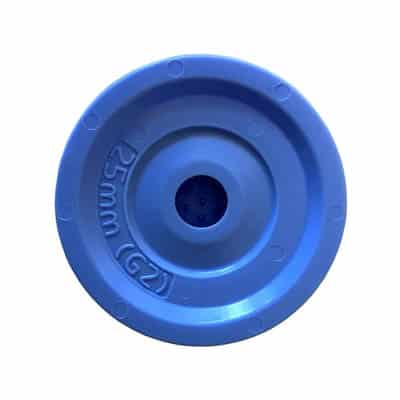
25mm Filter Cartridge
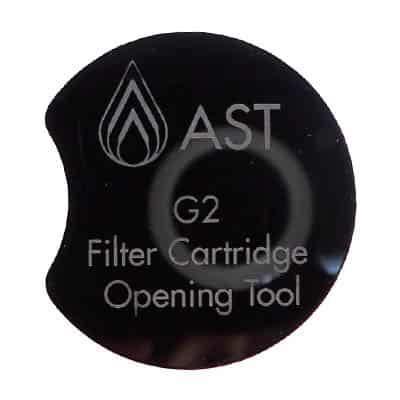
Filter Cartridge Opening Tool
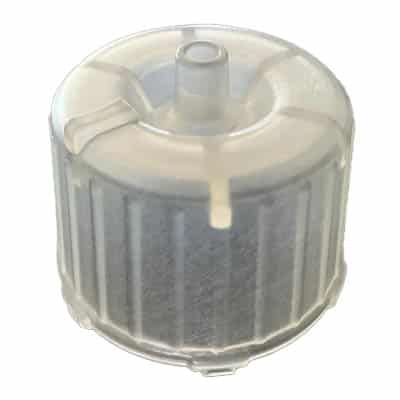
Flow Check Adapter
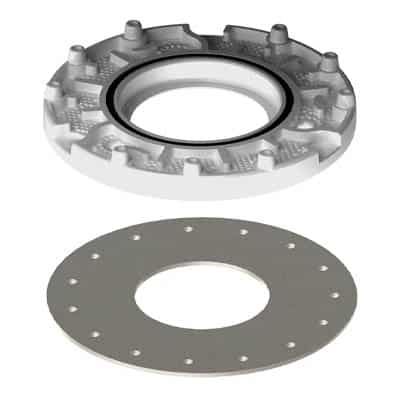
Pre-cyclone Impactor
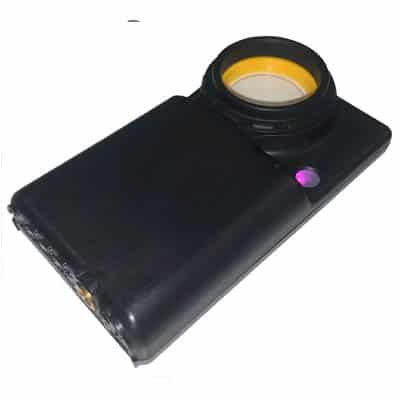
Open-faced Filter Cartridge

UPAS USB charging adapter (US)
UPAS USB charging adapter (EU)
PM Sample Analysis
In addition to providing Access Sensor Technology’s UPAS and HHM products, Berkeley Air Monitoring Group offers analysis services what are “non destructive,” so a single sample can be analyzed for PM mass, black carbon, and trace elements. Our UPAS and HHM air sampling services include:
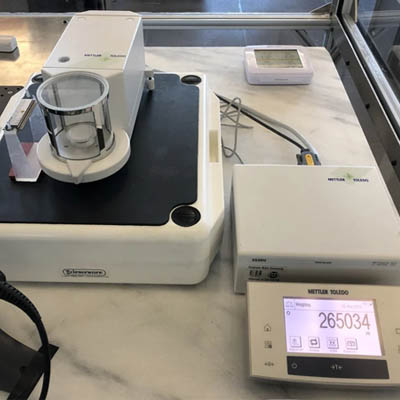
Pre- and Post-Gravimetric Weighing — Includes PTFE membrane filter, pre-sample weighing, and post-sample weighing.
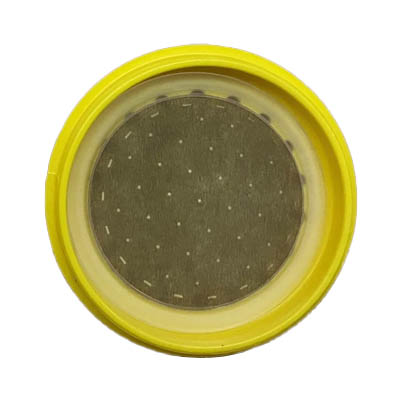
Black Carbon — Analysis of PM sample for black carbon using infrared light transmissometry.
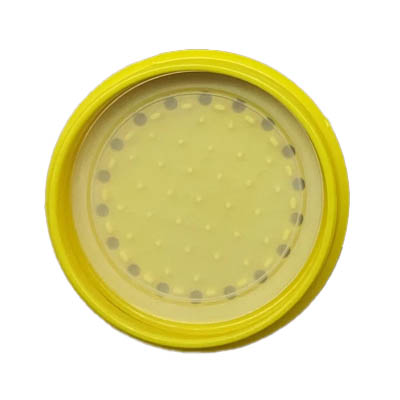
XRF — Analysis of PM sample for metals content using X-ray fluorescence.
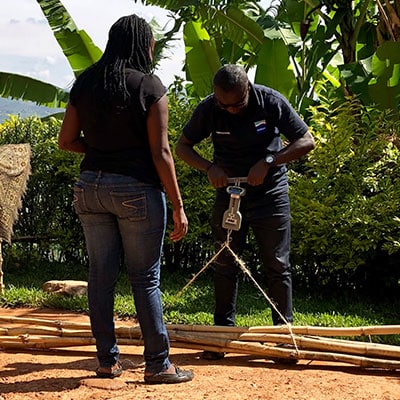

Get Expert Consulting And Analysis
Since 2008, Berkeley Air has been dedicated to collecting high quality data across the globe. Our team is here to provide project planning and targeted support for your project.
- In-depth product selection support
- Comprehensive training on instrument usage and associated data management (in-person or remote).
- Full-service research or MEL partner.
- Study design (method selection, sample size calculations, and instrument deployment protocols)
Contact us at Info@BerkeleyAir.com to get a quote on our expert consulting and analysis services.